Alix Cohen, BroadwayWorld.com Cabaret · October 2, 2015
Up Close and Personal with the Quietly Dazzling Amanda McBroom
at Feinstein’s/54 Below
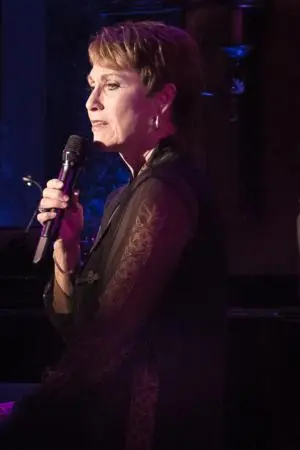
Writer and vocalist Amanda McBroom is something of a wonder. She manages to be lyrical and plainspoken, urbane and universal, polished and genuine, vulnerable and gutsy.
Her sharply etched songs illuminate our hearts and minds like artful X-rays. In performance, McBroom creates an atmosphere that is both intimate and deeply engaging.
Even airbrush light, she’s never insubstantial.
McBroom’s current show at Feinstein’s/54 Below, Up Close and Personal, presents material unearthed while she attempted to bring a little feng shui to her music studio. The program includes rarely heard songs, compositions with the ink barely dry, and a familiar anthem.
The wistful “It’s Still Spring” by McBroom and Shelly Markham describes “skin tone and knowledge fading” in a woman who, “like fine wine is ready for tasting.” Ineffably resonant, the verse hits home with the words, “I’m 17 and it’s still Spring.”
A haunting arrangement of “I Dream of Rain” (McBroom/Freddy Ravel) conjures not only crystalline drops, but musical puddles. The singer might just as well be looking back through reticent tears.
“New York at Night” (McBroom/Joel Silberman), worthy of the Big Apple canon, arrives somewhere between a swaying foxtrot and a very soft shoe, deftly rendered with an implicit shhhhhhh. Widely varied arrangements could not suit the artist or material better.
“Amanda,” McBroom’s first collaboration with accompanist, composer, lyricist, arranger, and dear friend Michelle Brourman-a worthy talent in her own right-began as “a little country waltz.” McBroom handed it to Brourman, saying, “This is what happened.”
The result is a hard, proud western saga, as expansive and resilient as the life it describes. The piano is steadfast and determined; one can almost hear wagon wheels turning. Brourman felt the chorus should be the wind’s name.
“How about Amanda?” she suggested.
“I can’t write a song called Amanda,” McBroom replied. “I can,” said her partner. The harmonized chorus sails through the room like the howl of a dust storm.
Tonight’s guests are composer John Bucchino and McBroom’s husband, actor and vocalist George Ball. For “Beautiful Mistake” (McBroom/Bucchino), Bucchino assumes the piano bench:
“Although it ended gracelessly-who else would use that perfect word?!-I still thank you for a beautiful mistake.”
A bittersweet love song after the fact, this one stills the place like a movie freeze-frame. More than one sigh can be heard.
Ball’s song, “Old Habits Die Hard,” comes from the musical Heartbeats, about a couple who have been together for a very long time. When McBroom asked her husband whether he would like to play the role, he objected that the wife had a point of view, but the husband did not. In response, she wrote:
“The promises made from a man to himself are hard to keep…”
Ball’s gravelly, muscular voice and wrenching performance inhabit the character completely. Every inch an actor, he is tender, regretful, and ashamed. “Wowza.” When McBroom comments, “Okay, I’m a mess,” she voices the collective feeling in the room.
As piquant and scrappy as she is immensely moving, McBroom offers the fresh-off-the-press “Run Run” (McBroom/Brourman), with juicy lines about frying bacon on a gun, forgetting the minimum wage, and getting out to run. The audience is enlisted as a Greek chorus. It is an absolute hoot.
She follows with the sassy rock ’n’ roll number “The Bitch Is Out” (McBroom/Joel Silberman), written for Goneril, King Lear’s youngest daughter, in McBroom’s off-Broadway musical Women of Will (Shakespeare). The song is simultaneously hot, cool, and literate.
A vocalist who can charm the pants off a ballad, purr through innuendo, or appear unflinchingly raw, McBroom also knows how to get down.
“I can’t do an evening without some sort of Jacques Brel,” McBroom says before introducing an unfamiliar number, “Early Morning Hangers On.”
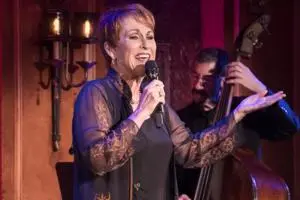
Jered Egan’s bass thrums like coursing blood. Brourman’s piano shifts from stroll to rag to opera. The song is spoken, sung, shouted, and dramatized, while McBroom’s arms seem to move of their own accord. She is swept up in the performance and still entirely in our faces.
Vehement, poetic, and cinematic, the song observes those who toil to pass the night away and wash away melancholy without dirtying their hands-the early morning hangers-on.
Ordinarily, another presentation of “The Rose”-the song that brought McBroom to public attention through the Bette Midler film-might not warrant mention. This evening, however, its concise and affecting rendition is striking, especially after what must have been hundreds of performances.
McBroom brings her teeth and guts to the powerful song as if it were entirely new. That, of course, is part of her transfixing appeal. Amanda McBroom is present in the moment. She looks unabashedly into our eyes and communicates. Every song has its own blood type; every feeling arrives intriguingly fresh.
And she is in very fine voice.
Photos by Lou Montesano/Still Rock Photography. Originally posted at: BroadwayWorld.com Cabaret
Amanda McBroom in review
More reviews
- The New York Times
- The Wall Street Journal
- Los Angeles Times
- The Times of London
- The Sydney Morning Herald
- The Australian
- New York Post
- The Dallas Morning News
- Music On TV: ‘True Detective’ Resurrects ‘The Rose’Michael Calia, The Wall Street Journal
- Noir - Songs of Love: Amanda McBroom at The Crazy CoqsTom Vallance, Classical Source
- Noir - Amanda McBroom with Michele Brourman - Crazy CoqsJeremy Chapman, Musical Theatre Review
- Amanda McBroom: Noir - Songs of LoveFiona-Jane Weston, Capital Cabarets and Shows Scene
- Usually I Can See The Stage At 54 Clearly - Not This TimeStephen Sorokoff, My View
- An Evening of Love Songs for GrownupsAlix Cohen on Playing Around
- One person’s art is another person’s kitschStephen Holden, The New York Times
- Cabaret ReviewStephen Hanks
- Amanda McBroomAn American in London
- Amanda McBroom at the Crazy Coqs, LondonMusical Theater Review
- Let’s Fall in Love: Amanda McBroom at The Crazy Coqsclassicalsource.com
- Amanda McBroom: ‘Let’s Fall In Love’Capital Cabarets And Other Shows Scene
- Amanda McBroom at The Crazy CoqsLondon Times
- Campy Ode to Film Noir and a Twist on PoliticsStephen Holden, The New York Times
- Amanda McBroom Is Alive And Well And Singing About ItStephen Holden, The New York Times
- Amanda McBroom wins hearts at Fairmont HotelMichael Granberry, The Dallas Morning News
- Amanda McBroom Sydney DebutDavid M Schwartz, Sydney City Recital Hall
- Hollywood VarietyJoel Hirschhorn
- Cabaret ReviewDaryl H. Miller, Los Angeles Times
- Amanda McBroom At Joe’s Pub
- Letting Go of Dreams but Keeping It CheerfulStephen Holden, Rahav Segev for The New York Times
- New McBroom sweeps through… “THE STAGE”John Martland, Light Entertainment Review
- NightlifeMichael Darvell at Pizza on the Park
- Amanda McBroom Pizza on the Park, SW1Clive Davis, The Times Of London
- AMANDA McBROOM: PIZZA ON THE PARKSheridan Morley
- McBroom sweeps well with old and newPalz Vaughan, Melbourne Herald Sun
- Emotional stylings from a fine talentJeremy Vincent, The Australian
- Amanda McBroom At The Melbourne FestivalBryce Hallett, The Sydney Morning Herald
- AMANDA McBROOM, Pizza on the ParkMichael Darvell
- PIZZA ON THE PARK, HURT’S SO GOOD…CABARETClive Davis, The Times
- Stylish vocals from McBroom…San Francisco Examiner
- AMANDA McBROOM - The Plush RoomJerry Friedman, KGO Entertainment
- Balladeer McBroom saves love songChad Jones, The Oakland Tribune
- Amanda McBroomculturevulture.net
- Planting a Garden Beyond ‘The Rose’Stephen Holden, The New York Times
- McBroom Sweeps Beyond StandardsChip Deffaa, New York Post
- This Weeks Beat: “Vocals”Jeff Rossen, Gay Chicago Magazine
- Amanda McBroomJoe Morris, Drama-Logue
- An all-American VoiceStephen Holden, The New York Times
- Beguiled by Amanda McBroom’s debut London PerformanceSheridan Morley, Boz Magazine